Pickup Routing
Pickup Routes That Plan Themselves
Real drive times, AI-cleaned addresses, walking zones, and meeting points — GuideScout turns a list of hotel names into an optimised pickup route and tells every guest exactly when and where to be.
Pickup Routing
Real drive times, AI-cleaned addresses, walking zones, and meeting points — GuideScout turns a list of hotel names into an optimised pickup route and tells every guest exactly when and where to be.
Pickup route planning is the process of turning every passenger's pickup location into an ordered, timed route for the guide. GuideScout does this automatically for every departure: it cleans and geocodes the addresses guests typed into your booking platform, computes real drive times, decides who gets picked up when, and keeps guests and guides informed as the plan evolves. What used to take an operations manager 30 minutes per departure happens in seconds.
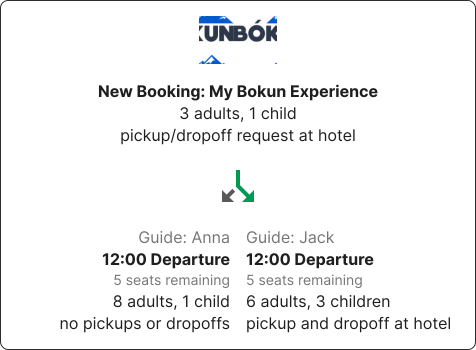
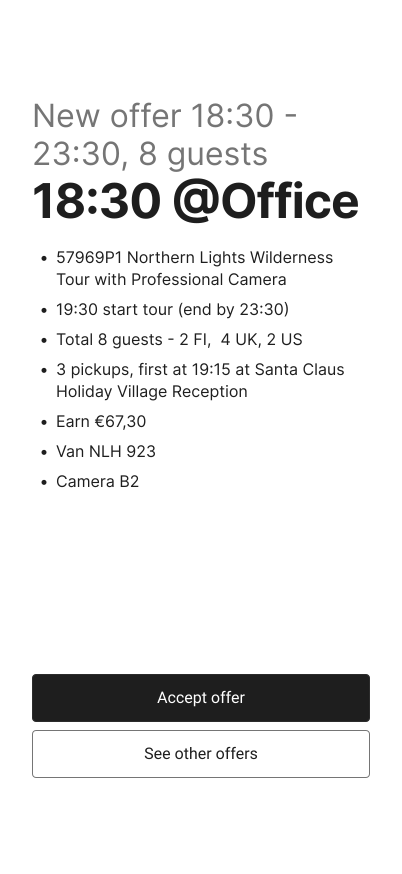
GuideScout computes the pickup order and per-passenger pickup times using live routing data, then adds your configured buffers. Choose a route objective — for example minimising total drive time or hitting the tour start as late as possible — and GuideScout optimises for it. Drive times also tell guides exactly when to leave for their first pickup.
GuideScout computes walking isochrones around meeting points — the area within a comfortable walk. Guests inside the zone are asked to walk to the meeting point at a set time; guests outside it keep their door pickup. In dense city centres this can cut route length dramatically while guests barely notice the difference.
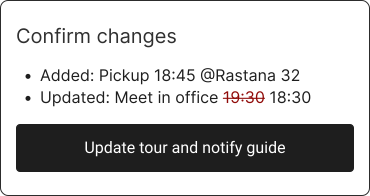
Every change to a pickup time or place triggers automatic guest notifications via SMS, WhatsApp, or the guest portal — with sensible guardrails: no notifications after the tour has started, no messages to cancelled passengers, and cooldowns that prevent notification spam when a route is edited repeatedly.
Common questions about pickup route planning:
GuideScout takes every passenger's pickup location in a departure, geocodes and normalises the addresses, and computes an ordered route using real drive times from the Google Maps Routes API. Pickup times are set per passenger, including buffer time, so the guide arrives at the tour start on time. Routes can be optimised for different objectives, such as earliest finish or shortest total drive.
Booking platforms often deliver noisy addresses — hotel names with typos, partial streets, or extra text. GuideScout runs an AI address normaliser that strips noise and resolves the address before geocoding, with multiple geocoding providers and caching behind it. Known places can also be aliased, so 'Santa's Hotel' always resolves to the right coordinates even if guests write it ten different ways.
Yes. GuideScout computes walking isochrones — zones within comfortable walking distance of a meeting point. Guests inside the zone can be directed to walk to the meeting point with clear instructions, while guests outside it get a door pickup. This can dramatically shorten routes in dense city centres.
When a pickup time or place changes — because a new booking shifted the route, or an operator adjusted it — GuideScout notifies the affected guests automatically via SMS, WhatsApp, or the guest portal, and updates the guide's itinerary. Notifications stop automatically once the tour has started, so nobody gets confusing messages mid-tour.
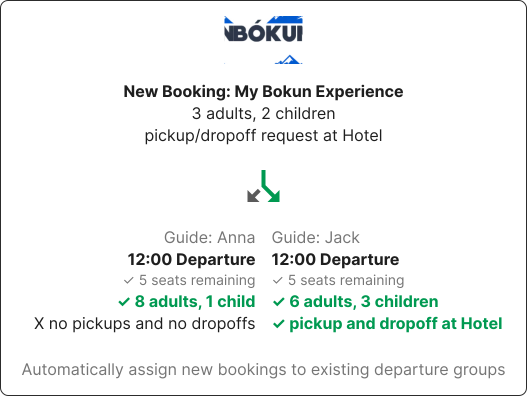
Yes. When two departures are merged, GuideScout re-optimises the combined pickup route automatically and recalculates every passenger's pickup time.
Guides get an ordered pickup list with times, passenger names, locations on a map, and one-tap navigation to each stop. GuideScout also calculates when the guide needs to leave to make the first pickup on time.
Sync bookings, cancellations, and passenger details from Bokun, FareHarbor, Peek, and calendar feeds in real time.
Learn moreTwo-way SMS and WhatsApp with every guest, with delivery receipts and a full communication log.
Learn moreGive every passenger a live portal with guide tracking, pickup details, and instant updates.
Learn moreUse GuideScout to match with the best guide for your tour.